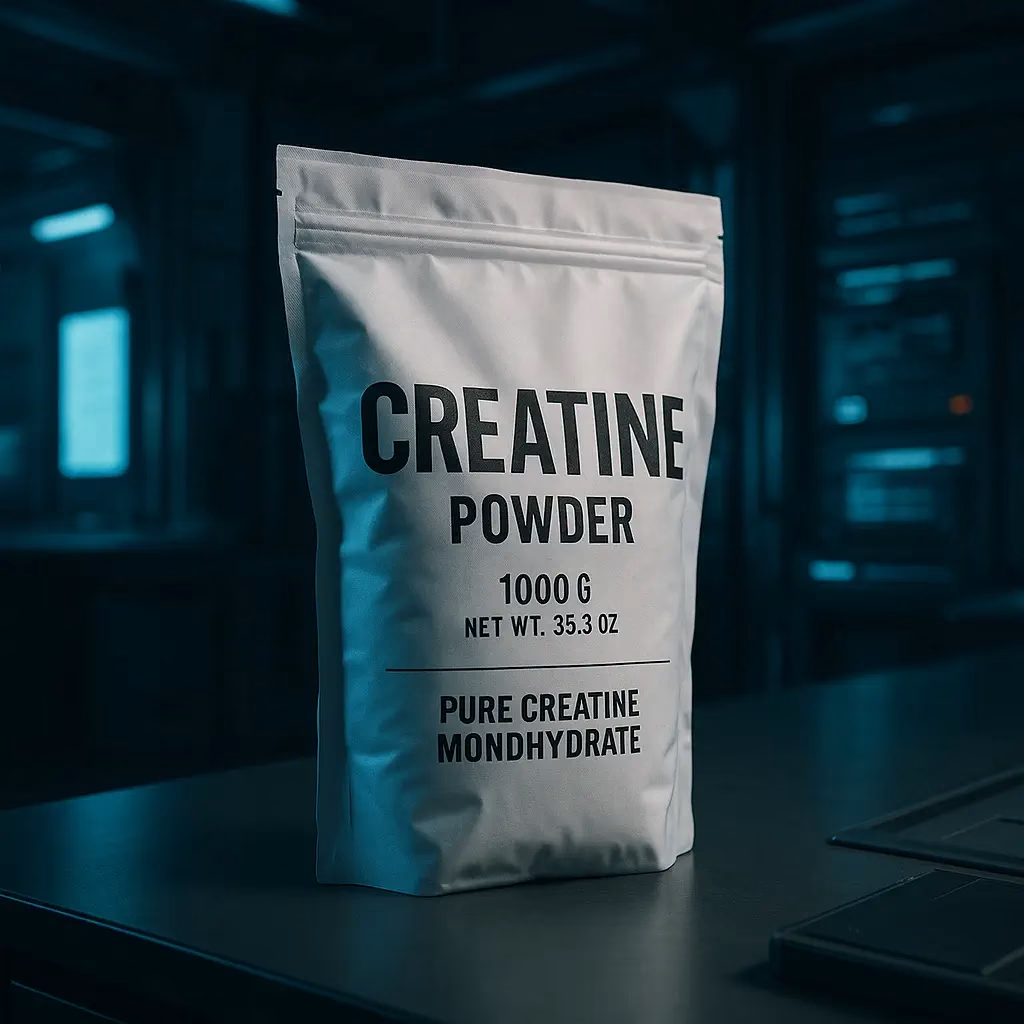
As an SSRP certified professional specializing in performance enhancement and recovery, I’ve witnessed countless athletes and high-performers struggle with the fundamental question: How do I properly implement creatine loading to maximize my training gains from day one? The Complete Guide to Creatine Loading represents the culmination of evidence-based research and practical application that can transform your approach to this foundational supplement.
Creatine monohydrate remains the gold standard for enhancing explosive power output, accelerating recovery between training sessions, and supporting lean muscle development. However, the critical first week—your creatine loading phase—determines whether you’ll experience optimal benefits or fall victim to common implementation mistakes that plague even experienced athletes.
This comprehensive guide addresses the specific needs of competitive athletes seeking immediate performance gains, dedicated bodybuilders pursuing muscle hypertrophy, business executives optimizing cognitive function, and biohackers exploring the intersection of supplementation and human performance optimization.
What You Are About to Learn
- The science-backed creatine loading protocol that saturates muscle stores 75% faster than traditional maintenance dosing
- Precise timing strategies for maximizing uptake and minimizing gastrointestinal discomfort during your first week
- Advanced combination protocols that enhance creatine transport and effectiveness through strategic nutrient timing
- Evidence-based troubleshooting methods for addressing common side effects like water retention and digestive issues
- Performance monitoring techniques to track your loading phase success and optimize long-term supplementation
- Professional-grade implementation strategies used by elite athletes and high-performers worldwide
Understanding Creatine Loading – The Science Behind Rapid Saturation in 2025
Creatine loading refers to a strategic supplementation protocol designed to rapidly saturate muscle creatine phosphate stores—the immediate energy system that powers explosive movements lasting 1-10 seconds. This phosphocreatine system (the immediate energy pathway your muscles use for explosive contractions) typically maintains energy for brief, high-intensity efforts before requiring regeneration.
The loading phase exploits your muscle tissue’s enhanced ability to uptake creatine when presented with supraphysiological doses. Research consistently demonstrates that proper loading protocols can increase muscle creatine content by 10-40% within the first week, compared to 3-4 weeks with standard maintenance dosing.
Creatine kinase—the enzyme responsible for creatine phosphate regeneration—becomes more efficient when muscle stores approach saturation. This enzymatic enhancement translates directly into improved training capacity, reduced fatigue between sets, and enhanced recovery between training sessions.
Furthermore, the loading phase creates an optimal environment for cell volumization—the process by which increased intracellular water content enhances protein synthesis signaling and reduces protein breakdown. This dual mechanism explains why properly implemented loading protocols often produce noticeable strength gains within 3-5 days.
The Evidence-Based Creatine Loading Protocol for 2025
Phase 1: Rapid Saturation (Days 1-5)
Dosage: 0.3 grams per kilogram of body weight, divided into 4-5 equal doses throughout the day Timing: Consume doses every 3-4 hours with meals containing carbohydrates and protein Duration: 5-7 consecutive days
For a 180-pound (82kg) athlete, this translates to approximately 25 grams daily, divided into 5-gram servings consumed at breakfast, mid-morning, lunch, afternoon, and dinner.
The carbohydrate co-ingestion strategy leverages insulin’s role as a creatine transport enhancer. Insulin stimulates the sodium-dependent creatine transporter (CreaT1), significantly improving muscle uptake efficiency. Aim for 35-50 grams of simple carbohydrates with each creatine dose.
Phase 2: Maintenance Transition (Days 6-7)
Dosage: Begin tapering to 3-5 grams daily Timing: Single dose post-workout or with your largest meal Monitoring: Assess body weight, training performance, and subjective energy levels
SSRP Pro Tip: Monitor your body weight during loading—a 2-4 pound increase indicates successful muscle saturation, while excessive weight gain may suggest overconsumption or individual sensitivity.
Advanced Loading Strategies: Optimizing Uptake and Minimizing Side Effects
The Carbohydrate-Protein Shuttle Method
Carbohydrate selection significantly impacts creatine uptake efficiency. Simple carbohydrates with high glycemic indices—such as dextrose, maltodextrin, or white rice—create rapid insulin spikes that maximize transporter activation.
Protein co-ingestion further enhances this effect through amino acid-mediated insulin potentiation. Combine each 5-gram creatine dose with:
- 35-40 grams simple carbohydrates
- 15-20 grams whey protein or equivalent
- 200-300ml water for optimal dissolution
Timing Precision for Maximum Effectiveness
Morning dose (upon waking): Capitalizes on overnight muscle glycogen depletion and enhanced insulin sensitivity Pre-workout dose (30-45 minutes before training): Ensures peak muscle creatine availability during high-intensity efforts Post-workout dose (within 30 minutes): Exploits the post-exercise window of enhanced nutrient uptake Evening doses (with dinner and before bed): Maintains consistent muscle exposure and supports overnight recovery
However, individual tolerance varies significantly. Some athletes experience better results with 3-4 larger doses rather than 5 smaller servings.
Monitoring Your Loading Phase Success – Key Performance Indicators
Objective Measurements
Body weight increases of 2-4 pounds typically indicate successful muscle saturation rather than fat gain. This weight represents increased intracellular water content and enhanced glycogen storage.
Training performance metrics should show improvement within 3-5 days:
- Increased repetitions at submaximal loads
- Enhanced power output during explosive movements
- Reduced fatigue between training sets
- Improved recovery between workout sessions
Subjective Indicators
Energy levels during high-intensity training often improve noticeably. Many athletes report feeling “stronger” or experiencing enhanced “muscular endurance” during the loading phase.
Muscle fullness and improved vascularity result from increased cell volumization. This effect becomes particularly apparent in individuals with lower baseline muscle creatine levels.
SSRP Pro Tip: Document your training performance daily during loading—track weights, repetitions, and subjective effort levels to quantify your response and optimize future supplementation cycles.
Troubleshooting Common Loading Phase Challenges
Gastrointestinal Discomfort Management
Digestive issues affect approximately 10-15% of individuals during loading. Symptoms typically include bloating, cramping, or loose stools, often resulting from excessive single-dose consumption or inadequate fluid intake.
Solution strategies:
- Reduce individual dose size from 5g to 3g while increasing frequency
- Ensure adequate water consumption (minimum 16-20 ounces per dose)
- Consume creatine with substantial meals rather than on an empty stomach
- Consider creatine hydrochloride (HCL) if monohydrate causes persistent issues
Water Retention and Appearance Concerns
Intracellular water retention represents the desired physiological response, not problematic “bloating.” This water accumulation occurs within muscle cells, contributing to enhanced training capacity and protein synthesis.
Extracellular water retention (subcutaneous bloating) typically indicates overconsumption, inadequate hydration, or individual sensitivity. Reduce dosage by 20-30% and increase water intake to address this concern.
Non-Responder Identification
Approximately 20-30% of individuals demonstrate limited creatine loading response due to genetic variations in transporter efficiency or naturally elevated baseline muscle creatine levels.
Characteristics of potential non-responders:
- Naturally lean individuals with high muscle creatine content
- Those with specific genetic polymorphisms affecting CreaT1 expression
- Individuals following high-protein diets with significant natural creatine intake
If you experience minimal response after 7-10 days, consider alternative dosing strategies or focus on other evidence-based performance supplements.
Common Misconceptions and Mistakes Regarding Creatine Loading
Misconception 1: “Loading is Unnecessary—Just Take 3-5 Grams Daily”
While maintenance dosing eventually achieves muscle saturation, the loading phase accelerates this process by 3-4 weeks. For competitive athletes or individuals seeking immediate performance enhancement, this time advantage proves invaluable.
The mistake: Choosing convenience over optimization. Many athletes miss crucial training adaptations during the initial weeks of supplementation.
Misconception 2: “More is Always Better—Take 30-40 Grams Daily”
Excessive dosing beyond 0.3g/kg body weight provides no additional benefit while increasing the risk of gastrointestinal discomfort and unnecessary expense.
The mistake: Assuming linear dose-response relationships. Muscle creatine transporters become saturated at specific concentrations, making additional supplementation ineffective.
Misconception 3: “Creatine Loading Causes Permanent Water Weight Gain”
Intracellular water retention represents a beneficial adaptation that enhances training capacity. This water remains within muscle cells, contributing to improved performance rather than aesthetic concerns.
The mistake: Conflating beneficial muscle hydration with problematic bloating. Proper loading protocols enhance muscle appearance through increased cell volume and vascularity.
Misconception 4: “All Creatine Forms Require Loading”
Creatine monohydrate demonstrates the most robust evidence for loading protocols. Alternative forms like creatine ethyl ester or buffered creatine often claim superior uptake without loading requirements, but lack supporting research.
The mistake: Choosing unproven alternatives over evidence-based protocols. Stick with creatine monohydrate and proper loading techniques for optimal results.
Misconception 5: “Loading Phases Must Be Repeated Monthly”
Muscle creatine saturation persists for 4-6 weeks after discontinuation. Regular loading cycles provide no additional benefit once initial saturation is achieved.
The mistake: Implementing unnecessary loading cycles that increase cost and potential side effects. A single loading phase followed by maintenance dosing maintains optimal muscle creatine levels.
SSRP Pro Tip: Focus on evidence-based protocols rather than marketing claims—creatine monohydrate with proper loading remains the gold standard for performance enhancement.
Peptide FAQs: Creatine Loading Edition
Q1: How quickly will I notice performance improvements during creatine loading?
Answer: Most athletes experience initial performance enhancements within 3-5 days of proper loading. Studies indicate that muscle creatine levels increase by 10-15% within the first 72 hours, with corresponding improvements in explosive power output and training capacity. However, individual response varies based on baseline muscle creatine content, training status, and adherence to proper dosing protocols. Athletes with naturally lower muscle creatine levels typically respond more rapidly and dramatically than those with higher baseline levels.
Q2: Can I combine creatine loading with other performance supplements?
Answer: Creatine loading combines synergistically with several evidence-based supplements. Beta-alanine enhances muscular endurance through different mechanisms, making it an excellent complement to creatine’s power-enhancing effects. Caffeine consumption before training can enhance creatine uptake through improved blood flow and cellular energy status. However, avoid combining with excessive sodium or diuretic substances that may interfere with proper hydration during loading. Always consult healthcare professionals before combining multiple supplements, especially if you have underlying health conditions.
Q3: What should I do if I experience digestive issues during loading?
Answer: Gastrointestinal discomfort affects 10-15% of individuals during loading phases. Reduce individual dose size from 5g to 3g while increasing frequency to 6-7 doses daily. Ensure adequate fluid intake (minimum 16-20 ounces per dose) and consume creatine with substantial meals containing carbohydrates and protein. If symptoms persist, consider switching to creatine hydrochloride (HCL), which demonstrates improved solubility and reduced digestive stress. Some individuals benefit from a modified loading protocol using 10-15% smaller doses over 7-10 days rather than the standard 5-day protocol.
Q4: Is creatine loading safe for women and older adults?
Answer: Creatine loading demonstrates excellent safety profiles across diverse populations. Women may experience slightly enhanced benefits due to naturally lower baseline muscle creatine levels, while older adults often show improved cognitive function alongside physical performance gains. However, women should monitor hydration status carefully during menstruation, as hormonal fluctuations can affect water retention patterns. Older adults should start with conservative dosing (0.2g/kg body weight) and monitor blood pressure if taking cardiovascular medications. Pregnant or breastfeeding women should avoid creatine supplementation pending additional safety research.
Q5: How do I know if creatine loading is working for me?
Answer: Successful creatine loading produces both objective and subjective indicators. Objective measures include 2-4 pound weight increases within 5-7 days, improved training performance metrics, and enhanced recovery between sets. Subjectively, you should notice increased muscle fullness, improved energy during high-intensity efforts, and reduced fatigue between training sessions. Track your workouts daily—successful loading typically produces 10-15% improvements in repetitions at submaximal loads or enhanced power output during explosive movements. If you experience minimal response after 10 days, you may be a genetic non-responder or have naturally elevated baseline muscle creatine levels.
Q6: Can I maintain my loading gains without continued supplementation?
Answer: Muscle creatine levels decline gradually after discontinuation, returning to baseline within 4-6 weeks. To maintain loading benefits, transition to maintenance dosing of 3-5 grams daily rather than discontinuing entirely. This approach preserves muscle saturation while minimizing cost and potential side effects. Some athletes prefer cyclical approaches—loading for 5-7 days every 6-8 weeks—but research suggests consistent maintenance dosing provides superior long-term benefits. The key is finding a sustainable approach that maintains your performance gains while fitting your lifestyle and training goals.
Professional Implementation: Advanced Strategies for 2025
Integration with Periodized Training
Periodization principles apply to creatine supplementation just as they do to training program design. Time your loading phases to coincide with high-intensity training blocks where explosive power development takes priority.
Strength and power phases benefit most from creatine loading, while endurance-focused training periods may emphasize other supplementation strategies. Coordinate your loading with planned training intensification for maximum synergistic benefits.
Biomarker Monitoring for Optimization
Advanced practitioners may benefit from periodic monitoring of relevant biomarkers:
- Creatine kinase levels (indicator of muscle damage and recovery)
- Serum creatinine (kidney function assessment)
- Body composition analysis (distinguishing muscle vs. water weight changes)
SSRP Pro Tip: Work with qualified healthcare professionals to establish baseline values and monitor changes during supplementation—this approach ensures both safety and optimization.
Combination with Recovery Modalities
Creatine loading enhances the effectiveness of various recovery strategies:
- Cold water immersion may be more effective when muscle creatine stores are optimized
- Massage therapy and soft tissue work benefit from enhanced intracellular hydration
- Sleep quality often improves due to enhanced recovery capacity
Conclusion: Maximizing Your Creatine Loading Success
The Complete Guide to Creatine Loading provides the evidence-based framework necessary for optimizing your supplementation strategy during the critical first week. Proper implementation of these protocols can accelerate your training adaptations, enhance performance outcomes, and establish the foundation for long-term supplementation success.
Remember that individual responses vary significantly—what works optimally for one athlete may require modification for another. The key to successful loading lies in understanding the underlying science, implementing proper protocols, and monitoring your individual response carefully.
Professional guidance remains essential for optimizing your approach and ensuring safety throughout the process. The strategies outlined in this guide represent current evidence-based practices, but individual circumstances may require personalized modifications.
For comprehensive support with your performance enhancement and recovery strategies, our team of SSRP certified professionals at Alpha Rejuvenation stands ready to help you achieve your goals safely and effectively.
Contact Alpha Rejuvenation:
- Email: experts@alpha-rejuvenation.com
- Phone: 949-642-1364
- Address: 1640 Newport Blvd. Suite #330, Eastside Costa Mesa, CA 92627, USA
Your journey toward optimized performance begins with informed decision-making and professional support—take the first step today.
References
- Kreider, R.B., et al. (2017). International Society of Sports Nutrition position stand: safety and efficacy of creatine supplementation in exercise, sport, and medicine. Journal of the International Society of Sports Nutrition, 14(1), 18.
- Hultman, E., et al. (1996). Muscle creatine loading in men. Journal of Applied Physiology, 81(1), 232-237.
- Green, A.L., et al. (1996). Carbohydrate ingestion augments skeletal muscle creatine accumulation during creatine supplementation in humans. American Journal of Physiology, 271(5), E821-E826.
- Steenge, G.R., et al. (2000). Protein- and carbohydrate-induced augmentation of whole body creatine retention in humans. Journal of Applied Physiology, 89(3), 1165-1171.
- Rawson, E.S., & Volek, J.S. (2003). Effects of creatine supplementation and resistance training on muscle strength and weightlifting performance. Journal of Strength and Conditioning Research, 17(4), 822-831.
- Syrotuik, D.G., & Bell, G.J. (2004). Acute creatine monohydrate supplementation: a descriptive physiological profile of responders vs. nonresponders. Journal of Strength and Conditioning Research, 18(3), 610-617.
Maximize Your Creatine Strategy: Essential Reading
Ready to take your creatine knowledge to the next level? We’ve created the most comprehensive creatine resource library to help you optimize every aspect of your supplementation:
🔬 Master the Science
Dive deeper into Why Some Men Respond Better to Creatine Than Others and discover how your genetic blueprint determines your supplementation success. Understanding your response type is crucial for cognitive optimization.
⏰ Perfect Your Timing
Learn the evidence-based approach in When to Take Creatine for Maximum Muscle Growth and Performance. While this focuses on physical benefits, the timing principles apply to cognitive enhancement too.
💊 Start Strong
New to creatine? Begin with The Complete Guide to Creatine Loading: Maximizing Your First Week to establish optimal muscle and brain saturation from day one.
🥊 Make Smart Choices
Confused about supplements? Our comprehensive analysis Creatine vs. Pre-Workout: Which Delivers Better Results? will help you make informed decisions about your supplement stack.